Health and Safety Policy – House Clearance Greenhithe
Policy overview
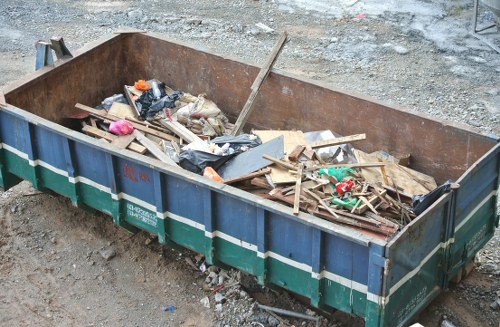 This Health and Safety Policy sets out the commitments and procedures of House Clearance Greenhithe for safe, compliant and efficient house clearance and rubbish removal operations across our service area. The policy aims to protect staff, contractors, clients and the public through clear responsibilities, robust risk management and documented operating standards. It applies to all activities associated with household waste clearance, furniture removal, and general site tidying performed by the rubbish company in the service area.
This document recognises that safe working practices are integral to quality service delivery and to maintaining the reputation of our Greenhithe house clearance business. The policy emphasises continuous improvement, compliance with relevant statutory requirements, and the minimisation of harm from manual handling, hazardous materials and environmental risks encountered during waste clearance tasks.
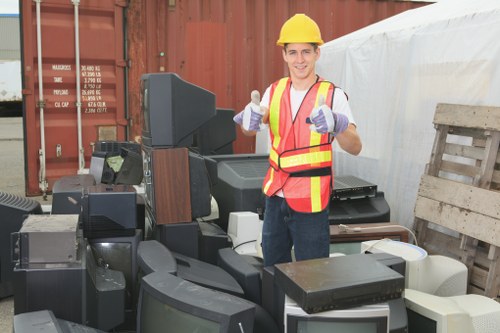 All staff and subcontractors engaged in waste clearance, rubbish removal or ancillary duties must observe the duties outlined in this policy. The company will provide adequate training, equipment and supervision and will ensure that risk assessments are completed for routine and non-routine tasks. Clear instructions will be provided for safe removal of bulky waste, recycling segregation and handling of potentially hazardous items commonly found during a house clearance.
This policy defines specific roles and responsibilities: the management team retains overall accountability for health and safety; supervisors are responsible for local implementation and monitoring; and each employee must follow safe systems of work and report hazards promptly. House Clearance Greenhithe expects all operatives to participate in toolbox talks and to use personal protective equipment (PPE) supplied by the company.
 Risk assessment is central to our approach. Before any job begins, a documented assessment will identify physical hazards, hazardous materials (such as asbestos fragments, sharps or chemicals), manual handling risks and site-specific issues like restricted access or unstable flooring. Control measures will include mechanical aids for lifting, two-person lifts for heavy items, use of correct PPE and exclusion zones where necessary.
Safe systems of work for rubbish collection and house clearance will include a mandatory pre-job briefing, clear segregation of waste streams for recycling and disposal, secure containment of items during transport and safe stacking practices. Operators must follow a staged workflow that minimises repetitive strain, trip hazards and the potential for falling objects.
Training and competence are essential. The company will provide induction training, manual handling instruction, hazardous materials awareness and role-specific refresher courses. Employees will receive guidance on safe vehicle loading, route planning within the service area and securement of loads to prevent spillage during transit. Regular training records will be maintained and reviewed as part of our continual improvement cycle.
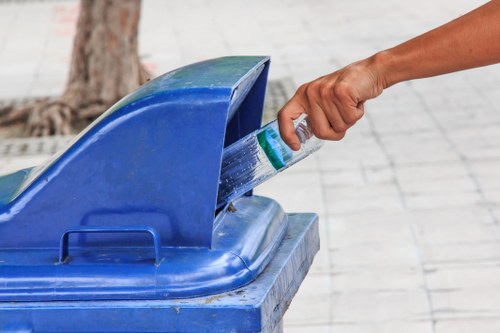 PPE requirements are clearly defined: high-visibility clothing, gloves suitable for handling waste and sharps-resistant liners where needed, safety boots with toe protection and eye protection for tasks with flying debris. Supervisors will ensure PPE is used correctly and replaced when damaged. The company will also supply appropriate cleaning and decontamination materials to reduce cross-contamination risks.
 Emergency procedures include first aid provision, clear routes for ambulance access, protocols for dealing with hazardous spills and arrangements for reporting incidents. All accidents, near misses and dangerous occurrences must be reported immediately, recorded and investigated to identify root causes and preventive measures. Robust communication channels will ensure that lessons learned are shared across the rubbish removal teams in the service area.
Monitoring, review and compliance
House Clearance Greenhithe will monitor health and safety performance through scheduled audits, site inspections and analysis of incident data. Key performance indicators will include the number of safety observations, completed risk assessments and the timeliness of corrective actions. Management reviews will be conducted at regular intervals to ensure the policy remains appropriate for the scale and complexity of our house clearance operations.We maintain a clear hierarchy of control for hazard mitigation: eliminate hazards where possible, substitute safer methods, apply engineering and administrative controls and provide PPE as the final layer of protection. The waste clearance teams will be briefed on alternatives that reduce manual handling and improve ergonomic practices, supporting long-term workforce wellbeing.
To support compliance and reduce environmental impact, the rubbish company promotes segregation for recycling, reuse and responsible disposal. Waste minimisation is encouraged through careful assessment of items for reuse and through collaboration with approved recycling outlets. All disposal actions will comply with permitted waste management practices applicable to our service area.
This policy is communicated to all employees, contractors and relevant stakeholders and is available to view on request. Non-compliance with the policy may result in disciplinary action or restriction from site duties until competence is demonstrated. The organisation is committed to maintaining a safe working environment and to supporting the health of staff engaged in house clearance, rubbish removal and related activities.
Implementation of this policy requires the active participation of every team member. By embedding safety into every stage of a clearance job — from planning and arrival on site through to vehicle unloading and waste transfer — House Clearance Greenhithe seeks to deliver a professional service with minimal risk to people and property across the service area.
Signed by management, this policy will be reviewed at least annually or following a significant incident, change of operations or introduction of new equipment to ensure it continues to meet operational needs and provides a safe, effective framework for all clearance activities.
