House Clearance in Greenhithe for homes, flats and sensitive clearances

House clearance in Greenhithe should be straightforward, careful and properly organised, whether you are emptying a whole property or dealing with one set of rooms at a time. We provide a practical clearance service for domestic properties, helping remove unwanted items from houses, flats, lofts, garages and other living spaces so the property can be handed back, prepared for sale, refreshed or simply made easier to use.
Our work is centred on clearance of household contents, with a focus on separating reusable items, general waste and materials that need special handling. That can include furniture, white goods, mixed bric-a-brac, boxed belongings, old fixtures and accumulated items that have built up over time. If you need a clear plan for what stays, what goes and what requires extra care, we can shape the job around the property rather than forcing the property to fit a rigid process.
For many customers, the key decision is not simply how much to remove, but how to organise the work so it is manageable. A good clearance should respect access, neighbouring properties, shared entrances and any items you want to keep aside. If you need a quote for a house clearance in Greenhithe, start by telling us the type of property and the main rooms involved. Request a quotation when you are ready.
What our house clearance service covers
House clearance can range from removing a few bulky items to clearing an entire home after a move, renovation or long period of storage. We handle the physical removal of contents from inside the property and, where needed, from attached spaces such as lofts, basements, sheds and garages. The aim is to leave the space stripped back to the agreed level without making you sort through every item alone.
Because domestic clearances often involve mixed belongings, the process usually needs more than just lifting and loading. We separate items according to how they can be handled, and we work with the customer’s instructions where certain possessions need to be retained, set aside or reviewed before removal. That approach suits properties with a mixture of furniture, personal effects, unwanted clutter and ordinary household waste. It also helps keep the job orderly when several rooms are being cleared in stages.
Common clearance requests include items from bedrooms, reception rooms, kitchens, storage cupboards and outbuildings. The best results come when the scope is clear from the outset, so the service can be matched to the property size and the amount of contents involved. If you only need selected areas cleared, that can be planned too; the job does not have to be treated as an all-or-nothing project.
Rooms, access and the practical shape of the job

Homes are rarely cleared in the same way twice. A terrace with narrow stairs, a ground-floor flat with limited parking, or a larger family house with multiple floors all create different practical needs. We plan around the layout so that removal is handled safely and with as little disruption as possible. That may mean working room by room, moving items through a shared hallway carefully, or dealing with heavier furnishings first so the rest of the job is easier.
Access matters as much as volume. If items are in a loft, a rear extension, a garage or a garden store, the route out of the property influences timing and organisation. Clearance work is usually smoother when the access route, the rooms involved and any awkward objects are identified early, because that allows the job to be approached in a sensible order. It also reduces the risk of avoidable delays once the work has started.
Where the property contains a mixture of everyday furniture and lighter household objects, a structured clearance can make the difference between a rushed collection and a careful one. Sofas, wardrobes, tables, shelving, boxed items and smaller loose contents all need a different handling approach. The objective is to remove the agreed items efficiently while protecting the parts of the home that are not part of the clearance.
Household items we regularly clear
Domestic properties often contain a wide spread of materials, and not all of them are dealt with in the same way. We can remove worn furniture, general household clutter, broken items, bagged contents, kitchen surplus and other unwanted belongings from the rooms you specify. Where there are items you are unsure about, it is usually better to flag them in advance so the clearance can be planned correctly.
The following types of contents are commonly included in a house clearance:
- chairs, sofas and other domestic furniture
- wardrobes, beds and flat-pack items
- boxes, sacks and loose household contents
- small appliances and kitchen items
- garage and loft belongings collected over time
Some clearances involve a straightforward mix of old furniture and general rubbish, while others contain personal possessions that need checking before removal. A measured approach helps prevent mistakes and keeps the job respectful. If anything is to remain in the property, it is best to separate it before the clearance begins or make that instruction clear when requesting the quotation.
Furniture clearance within a wider home clearance
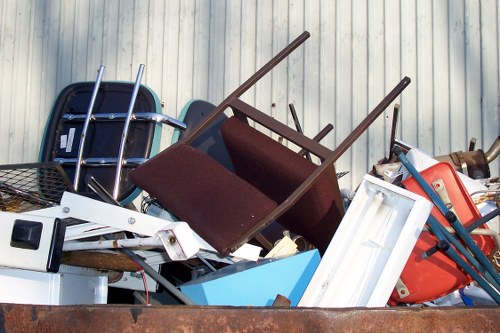
Furniture clearance is often part of a larger house clearance, especially when the home contains bulky items that take up most of the space. We remove furniture that is no longer wanted, no longer needed or unsuitable for the property’s next use. That can include items from lounges, dining rooms, bedrooms and home offices, along with pieces that are difficult to move without a proper plan.
Some customers want the home cleared in stages, beginning with the larger pieces and then moving on to the smaller contents. Others prefer a full clearance in one visit where the rooms can be emptied in a single organised process. Either approach can work well if the scope is agreed in advance. This is one reason why it helps to be clear about which pieces are staying, which are going and whether any furniture needs to be taken apart before removal.
We also recognise that furniture often sits alongside mirrors, lamps, side tables, fitted shelves and other mixed domestic items. A sensible clearance keeps these grouped according to your instructions rather than treating every object as interchangeable. If you need support clearing a room that is dominated by bulky furniture, a focused furniture clearance can be built into the wider house clearance plan.
Lofts, garages and other overfilled spaces
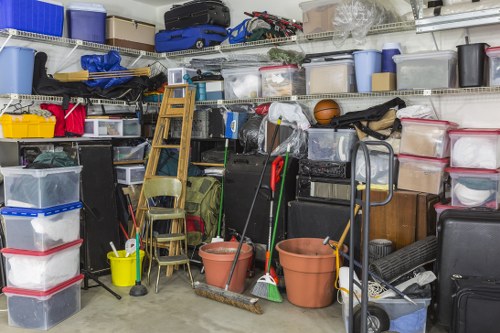
Extra storage spaces can become the most demanding part of a home clearance because they tend to contain a long accumulation of mixed belongings. Loft clearance and garage clearance often involve boxes, broken household items, old decorations, unused equipment and general storage that has not been reviewed for years. These spaces may be awkward to access, so the work needs a careful approach rather than a quick sweep-through.
In practical terms, this sort of clearance usually starts with identifying what is stored there, what should stay and what is ready to go. A loft may include seasonal items, archived paperwork or furniture that has been taken apart. A garage may contain tools, garden items, bicycles, shelving and forgotten containers. The value of a proper clearance is that it prevents the contents from being treated as one undivided pile; each category can be handled in the most suitable way.
If the main house is reasonably orderly but the storage areas are overloaded, clearing those spaces can transform how usable the property feels. It also makes later decorating, repair work or moving plans easier to organise. For that reason, many customers choose to include these areas within the same quote as the rest of the home rather than dealing with them separately.
Planning a clearance with care and clarity
A good quotation depends on clear information about the property, the amount of contents and any practical issues that could affect the work. The most useful details are the type of property, the rooms involved, the main items to be removed and whether there are stairs, shared entrances or limited parking. You do not need to produce a complicated inventory, but a sensible outline helps avoid misunderstandings and lets the job be scoped properly.
If photographs or a room-by-room list are available, they can help describe the work more accurately. They are not always essential, but they can be useful when there are several bulky items, storage areas or mixed contents that are hard to summarise in a short message. Keeping aside anything you wish to retain before the clearance begins is equally helpful, because it reduces the chance of confusion and keeps the work moving at an orderly pace. Request a quotation when you have the basic details to hand.
Some properties also need the work arranged around other commitments such as cleaning, handover, refurbishment or moving dates. In those cases, the clearance may need to be sequenced carefully so that the right rooms are completed at the right time. That sort of planning is most effective when the customer and the clearance team are working from the same clear scope from the start.
How pricing is usually shaped
House clearance pricing is normally influenced by the amount of material involved, the size and layout of the property, access conditions and the type of items being removed. A single room with a modest amount of furniture and general contents is a different job from a full property with loft, garage and multiple floors. The more precise the scope, the more reliable the quotation is likely to be.
It is also important to distinguish between straightforward household contents and items that may need extra handling because they are awkward, heavy or mixed with other materials. The time needed to sort, carry and load the contents can vary considerably. That is why it is better to describe the work clearly rather than simply asking for a price based on the name of the property alone. In many cases, the practical details matter more than the headline room count.
If you are comparing different options, focus on what is actually included in the clearance and whether the scope matches the rooms you want dealt with. A careful quotation should reflect the work you need rather than assume every house is the same. For a simple starting point, tell us what needs clearing and what should remain in place.
About Greenhithe
Greenhithe is a settlement on the River Thames in north-west Kent, now within the borough of Dartford. Its history is shaped by the river, the former riverside industry and the later growth of transport links and housing. The place takes its name from the distinctive chalk outcrop or “hithe†associated with the river landing, and for many years it remained a small community linked to ferries, quays and local trade. The area’s riverside setting still gives it a strong sense of place, with the Thames forming a major part of its identity. Nearby waterways and embankments contribute to the landscape, while the wider Dartford area has long connected Greenhithe with nearby settlements across north Kent and towards London.
Domestic clearances arranged around your property

Some clearances are best handled as a full-property project, while others work better when the rooms are tackled in a particular order. We can build the job around the layout of the home, the items you want removed and the point at which the property needs to be ready for its next stage. That means the service can suit a lived-in house, an empty one awaiting handover, or a property that simply needs selected spaces made usable again.
When planning a house clearance in Greenhithe, it is often helpful to think in terms of zones: main rooms, storage areas, loft, garage and any outbuildings. This makes it easier to describe the work accurately and helps ensure the quote reflects the real amount of clearance required. If there are especially delicate items, things to keep aside or access points that need attention, mention those when requesting the quotation so the work can be arranged sensibly.
For a clear next step, tell us what needs clearing and what outcome you want from the property. Use our contact page to request a quotation or simply send a brief note with the rooms and items involved. If you are still deciding how much work is needed, our pricing and quotes page may help you frame the request before you get in touch.
Related clearance services
Some customers only need one section of a property cleared, while others want several linked services carried out together. That might mean focusing on a loft that has become overfull, dealing with a garage packed with storage, or removing a cluster of old furniture that is dominating one part of the home. Keeping the scope specific helps the clearance stay efficient and prevents unnecessary work in rooms that do not need attention.
Where the contents include mixed domestic waste as well as reusable furniture or general household items, it can help to separate the different service needs at the quotation stage. The clearer the scope, the more naturally the clearance can be matched to the property. If you are deciding between a complete house clearance and a smaller targeted job, start with the rooms that matter most and build from there.
You can also use the service alongside other planned work, such as cleaning, moving or refurbishment, provided the timing and access arrangements are clear. A measured approach is especially useful where several rooms are being prepared for a different use. When you are ready to proceed, request a quotation and outline the scope in plain terms.